Medical Card & Visitor Info
State-by-State Reciprocity: Does My Medical Card Work in Puerto Rico?
Puerto Rico does not directly accept out-of-state medical cards. The state-by-state breakdown for adults 21+, what your home-state card actually does and doesn't get you, and the 30-day temporary registration that does work.
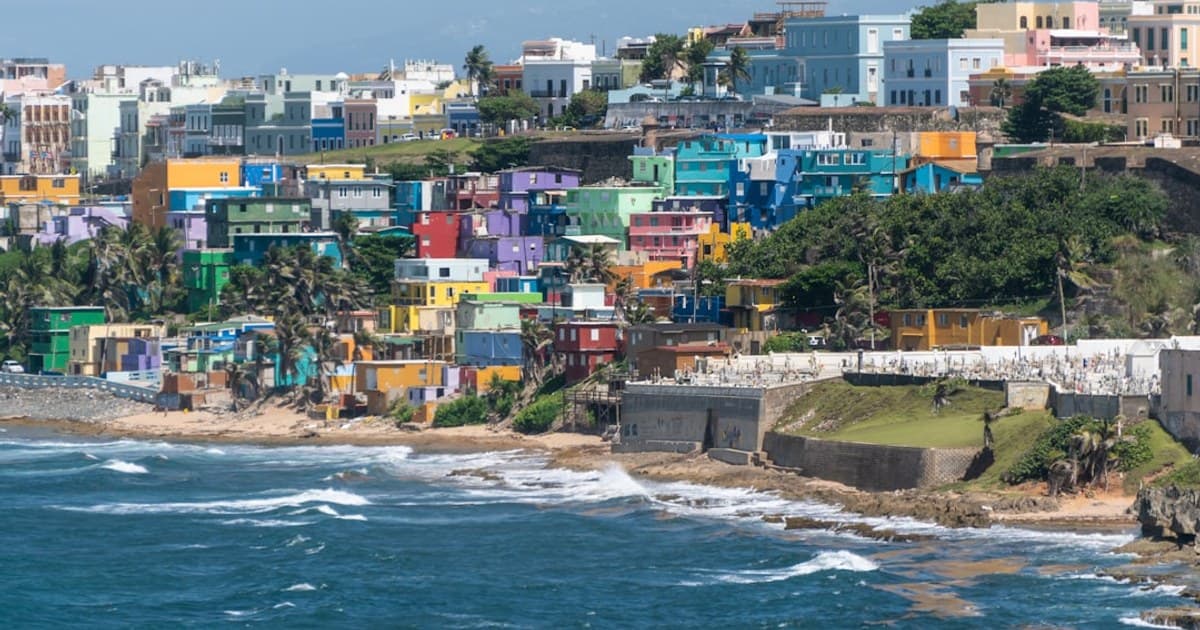
Photo by Sonder Quest on Unsplash
In this piece ↓
- The Short Answer
- Why No Reciprocity
- What Your Home-State Card IS Useful For (Mostly Nothing)
- State-by-State Breakdown
- California (MMIC / Prop 215)
- Florida (OMMU)
- New York (Compassionate Care Act)
- New Jersey (CRC)
- Massachusetts (CCC)
- Connecticut (DCP)
- Illinois (IDPH)
- Colorado (MED)
- Other states (PA, MI, AZ, NV, MD, OH, MO, MN, OK, AK, HI, etc.)
- Recreational-only states (no medical program)
- The Path That Does Work
- Why This Matters Editorially
- Related Reading
The single most asked question on this site, by traffic and by inbox: "I have a medical card from [state]. Can I just use it in Puerto Rico?" The honest answer is no, in every case. Puerto Rico's medical cannabis program does not have direct reciprocity with any US state program. Your home-state card is not accepted at JRCM-licensed dispensaries on the island.
The path that does work for adults 21+ is the 30-day temporary patient registration, available to non-residents through a JRCM-licensed telehealth physician. That's the one route, and it's available regardless of which mainland state issued your existing card.
This is the breakdown: why reciprocity doesn't exist between PR and any US state, what your home-state card is and isn't useful for during a visit, and how the temporary registration replaces it cleanly.
The Short Answer
PR's program operates under the Junta Reglamentadora del Cannabis Medicinal (JRCM), the island-level regulator. JRCM was established under PR Act 42-2017 and operates as a closed program: only patients in JRCM's database, with a JRCM-issued patient registration card, can purchase from JRCM-licensed dispensaries.
There is no inbound reciprocity. JRCM does not honor patient cards issued by any US state, US territory (USVI, Guam), or country. The reason is structural: each US state's medical program runs its own database and qualifying-condition list, and those systems are not connected to JRCM's. Even where qualifying conditions overlap perfectly (chronic pain, PTSD, cancer-related symptoms), the verification mechanism doesn't bridge.
Worth saying explicitly: this is true regardless of how robust your home-state program is. California, the oldest medical program in the country, doesn't bridge to PR. Florida, which has a large Caribbean-traveling patient population, doesn't bridge. New York, the closest mainland program with statutory similarity to PR's framework, doesn't bridge. The issue isn't program quality; it's that JRCM is a closed registry.
Why No Reciprocity
Two reasons, and both are durable enough that this isn't likely to change soon.
The legal reason. Cannabis remains federally illegal in the US. Each state and territorial program operates as a state-law carve-out, and the federal government's posture is non-enforcement against state-compliant patients, not affirmative interstate recognition. There's no federal mechanism that would compel Texas to honor a Connecticut card, and the same dynamic prevents PR from honoring a California card. Even if every program wanted to reciprocate, the federal scaffolding for cross-jurisdictional patient verification doesn't exist.
The verification reason. PR's dispensaries are required to query JRCM's patient database at point of sale. The track-and-trace system enforces both single-day and 30-day cumulative purchase limits across all licensed dispensaries network-wide; see purchase limits and the 30-day cycle for how that works. There's no API into California's MMIC database that PR's POS system could query, and there isn't one for any other state either. The 30-day registration solves this by putting the visiting patient in JRCM's database for the duration of the trip.
What Your Home-State Card IS Useful For (Mostly Nothing)
A short list, because it's tempting to assume the card has some kind of partial utility:
- Not useful at JRCM dispensaries. No discount, no shorter line, no reduced verification step. Bring it; it won't help.
- Not useful as proof of qualifying condition. The telehealth physician who issues the temporary registration runs an independent evaluation. Your home-state card is not accepted as a substitute for the evaluation.
- Not useful for purchase limits. Your home-state purchase history doesn't factor into PR's 30-day rolling limit; you start fresh in PR's system.
- Not useful for federal travel. TSA does not honor any state-issued medical card as a federal protection. Cannabis cannot legally fly with you. See the travel FAQ for the air-travel detail.
The card itself stays in your wallet during the trip. The temporary registration is what dispensaries actually verify.
State-by-State Breakdown
Same answer in every row, but the routing question varies a little.
California (MMIC / Prop 215)
CA's program is the oldest and most established. PR doesn't honor MMIC cards. Path forward: telehealth + JRCM registration. CA patients tend to find PR's qualifying-condition list familiar; the documentation you already have for your CA recommendation usually maps cleanly.
Florida (OMMU)
FL has the largest Caribbean-traveling patient population in the network. PR doesn't honor FL OMMU cards. Path forward: same telehealth + JRCM registration. FL's qualifying conditions (chronic pain, PTSD, ALS, cancer, Crohn's, epilepsy, glaucoma, HIV/AIDS, MS, PD, terminal conditions) are all on JRCM's list, so the qualifying-condition step is generally straightforward.
New York (Compassionate Care Act)
NY's program has the closest statutory parity with PR's. Same outcome though: NY MMP cards are not honored at JRCM dispensaries. Telehealth + temporary registration is the path. NY patients sometimes assume the bilateral political relationship between NY and PR creates some kind of program bridge; it doesn't.
New Jersey (CRC)
NJ's medical program (now run alongside the recreational market) doesn't reciprocate. Same path. NJ patients should note that PR is medical-only — the recreational habits that work in NJ don't translate.
Massachusetts (CCC)
MA medical cards aren't honored. Telehealth + registration. MA patients with the recreational market at home sometimes underestimate PR's compliance frame; PR is medical-only and prohibits public consumption (no beach, no street, no rental car). See cannabis etiquette for tourists.
Connecticut (DCP)
CT cards aren't honored. CT's qualifying conditions overlap with JRCM's heavily. Same telehealth path.
Illinois (IDPH)
IL Medical Cannabis Patient Program cards aren't honored. Telehealth + registration. IL patients often have detailed condition documentation from their physicians that the telehealth provider will accept as supporting evidence.
Colorado (MED)
CO medical cards aren't honored. Same path. CO patients should note: PR's authorized methods do not include smokable flower; vaporization is the inhalation method.
Other states (PA, MI, AZ, NV, MD, OH, MO, MN, OK, AK, HI, etc.)
Same answer for every state with a medical program: not honored. Telehealth + JRCM registration is the universal path. Programs that issue digital-only cards (some recent state programs) tend to be slightly faster to upload, but the underlying registration process is identical.
Recreational-only states (no medical program)
If you're coming from a state with adult-use only and no medical card (because your state didn't run a medical program before legalizing recreationally, or you never enrolled), the path is the same as everyone else's: qualifying-condition documentation through the telehealth physician, then JRCM registration. Recreational-only history doesn't shorten or lengthen the process.
The Path That Does Work
The full step-by-step lives in the temporary patient registration walkthrough. Short version:
- Schedule a telehealth visit with a JRCM-licensed cannabis physician. Most clinics do five-minute video consults; clinic fees run $40 to $60.
- Submit qualifying-condition documentation — your home-state card and any underlying medical records help the telehealth physician complete the evaluation.
- JRCM registration — the physician submits the registration on your behalf. Government fee is $25.
- Approval window — typically 1 to 3 business days. The card is digital; you'll have it on your phone before your first dispensary visit.
The 30-day registration is renewable once during the same trip if you're staying longer than four weeks.
Why This Matters Editorially
The reciprocity question is the highest-intent search in the visitor segment because every patient assumes it's a yes-or-no answer. The honest answer is no, but with a clean alternative that takes a few hours of effort and costs less than $100 total. Patients who do the registration get full access to the JRCM-licensed market for their trip; patients who don't are stuck either trying their luck at illegal channels (which carries actual legal risk) or going without.
The visitor numbers tell the story. PR's medical patient registry hovers around 130,000 people; the state-and-territory population is 3.2 million; tourist visits are around 5 million annually. The temporary-registration mechanism is the channel that lets the visitor population participate legally without bloating the resident-patient registry permanently.
Related Reading
- The 30-day temporary patient registration step-by-step
- How to get a medical cannabis card in Puerto Rico
- Tourist's complete guide to cannabis in Puerto Rico
- Cannabis travel FAQ: flying, cruises, and getting around PR
- How PR's cannabis program compares to US states
This is editorial, not legal advice. Verify current JRCM requirements at cannabis.pr.gov before applying.